
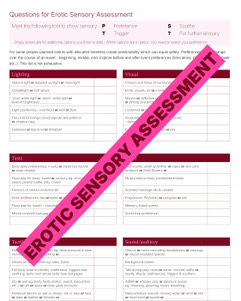
What Is an Erotic Sensory Assessment?
This is an exploratory tool that is informed by modern sensory profiling tools. Dr. Winnie Dunn and Tina Champagne developed the original frameworks and this Erotic Sensory Assessment integrates aspects of their work into the erotic experience. Their work helps us understand how sensory processing shapes safety, regulation, overwhelm, underwhelm, and connection, all essential ingredients of erotic wellbeing. Sensory profiling tools are used by professionals to identify the sensory patterns that influence everyday wellbeing, particularly for individuals who are neurodivergent, experience anxiety, or have a history of trauma.
For practitioners, this Erotic Sensory Assessment supports guided inquiry, somatic sex education, and collaborative reflection. Practitioners using this tool are encouraged to apply it within their scope of practice: integrating trauma-informed, neuroqueer affirming, and consent-based frameworks.
For individuals engaging with this tool, it offers a structured way to explore your nervous system needs within erotic contexts. Individuals engaging with this tool may find it helpful to explore these reflections with a qualified therapist, psychosexual or somatic sex educator, or
trusted support person, particularly if strong emotions, memories, or sensations arise.
This is not a clinical assessment and does not replace any formal sensory profiling tools – although this tool has the potential to enhance an existing assessment.
Why Your Erotic Sensory Experience Matters
Curating your erotic experiences to suit your unique sensory preferences means that pleasure and connection can feel safer and more accessible. If the experience is overwhelming or under-stimulating, intimacy can feel stressful or uncomfortable. Also during times of need, it’s important to know your sensory soothers – things that support your return to a sense of safety.
Understanding your sensory needs helps you identify and communicate what enhances your pleasure, recognise boundaries, adapt environments, reduce overwhelm, and achieve states of decompression and calm. Developing your erotic intelligence, including tending to your nervous systems needs, is an essential element for living a healthy erotic life.
Three Main Types of Sensory Reactivity
- Heightened sensitivity (Hyper-reactivity): Sensations may feel too intense or overwhelming.
- Reduced sensitivity (Hypo-reactivity): Stronger sensory input may be needed to feel engaged.
- Sensory seeking: Craving intensity, movement, rich textures, or deep pressure.
Signs of Sensory Overload
- Difficulty staying present – numbness in body, run away thoughts
- Irritation or anxiety from touch or noise
- Overwhelm from movement or closeness
- Physical discomfort such as nausea or tension
- Shutdown, freezing, withdrawing, or needing space
Self-Awareness and Compassion
The purpose of this tool is to help you create pleasurable experiences that feel safer and more authentically aligned with your unique needs, rather than following what is ‘normal’ or what you think you ‘should’ want.
Clear communication is key. Take time exploring each option – this is not meant to be a quick process. The next step is integrating the necessary changes into your erotic life. Your sensory reactivity may shift with context, safety, energy levels, emotional states, and might evolve over time. Understanding and celebrating uniqueness means everyone gets to live a more authentic and fulfilling life.
If you want me to guide you with this tool contact me here
If you want to read more of my writings click here for my blog